
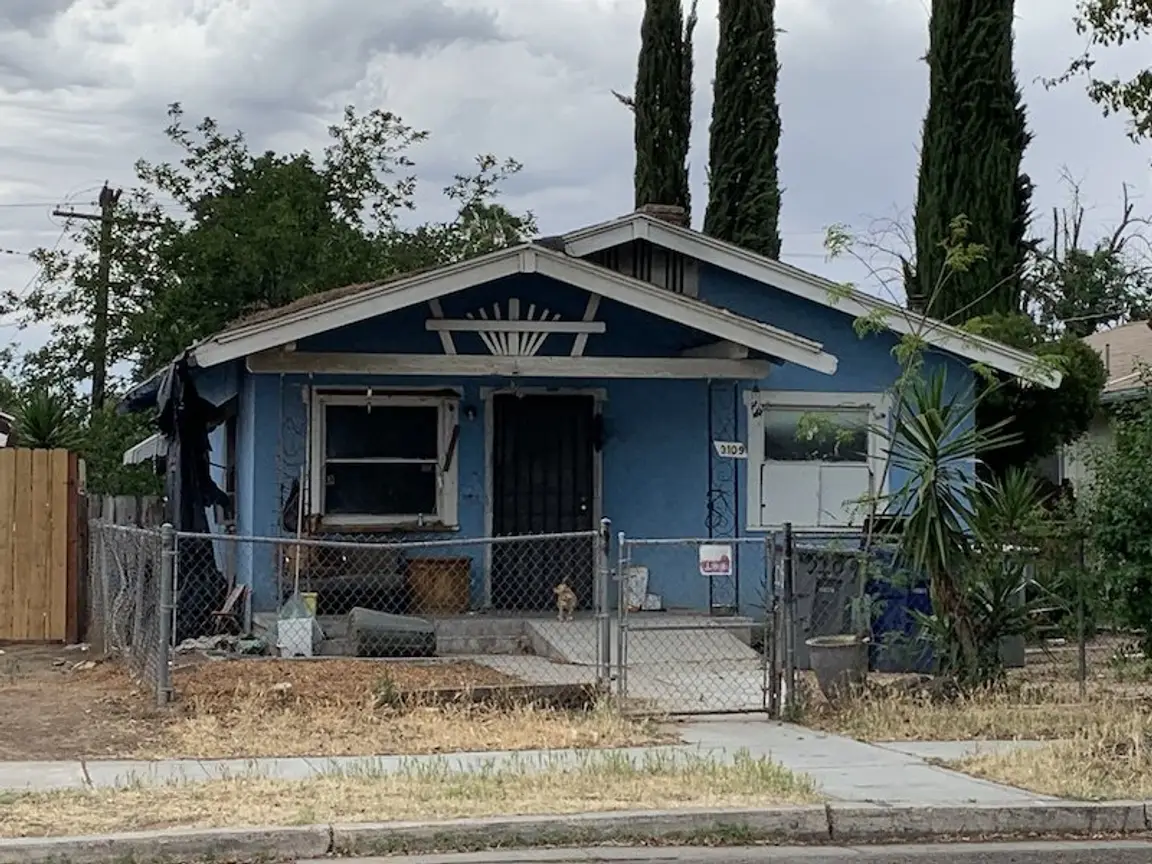
Yes — you can sell a house in Fresno, California with an unpermitted addition or a converted garage, and you do not have to tear it out first. Unpermitted work is a disclosure issue and an appraisal issue, not a legal bar to selling. What it changes is which buyers can get a loan on your house, and whether the extra square footage counts toward your price at all.
What do mortgage rates at 6.95% have to do with an unpermitted garage conversion?
More than most sellers expect. A lot of people assume borrowing costs have been quietly drifting down this year. The data says otherwise. As of the Freddie Mac Primary Mortgage Market Survey dated September 17, 2026, the 30-year fixed-rate mortgage averaged 6.95%, up from 6.76% the week before and 6.26% a year earlier. The 15-year fixed averaged 6.26%, up from 6.09%.
That matters here because a buyer paying roughly 69 basis points more than last year is a buyer whose lender is looking very closely at the appraisal. And the appraisal is exactly where unpermitted square footage gets decided.
Will a mortgage lender refuse a house with unpermitted square footage?
There are two versions of the answer circulating, and the gap between them is one word.
The guideline-backed view is that missing permits, by themselves, do not kill a loan. Freddie Mac’s Single-Family Seller/Servicer Guide is direct about it: under § 5605.5, “If there are additions or alterations that were made without required permits, the appraisal report should contain comments on the quality and appearance of the work.” That is a commentary requirement. It is not a rejection.
The alarmist version — the one you hear at the hardware store — is that no lender will touch it and the City will make you demolish it. That view generalizes from the worst case to every case.
Here is where they actually diverge. The same Freddie Mac section lists “substandard additions to the original structure” as an example of a Q6 quality rating, and a property with a Q6 rating “is not acceptable collateral to secure a Mortgage sold to Freddie Mac unless all issues that caused the property to be rated with a Q6 quality rating are cured before delivery.” So the guideline does not turn on paperwork. It turns on quality. A sound, well-built conversion without a permit is a comment in the report. A substandard one is a dead loan until it is fixed.
What does an unpermitted addition actually cost a Fresno homeowner?
Converted garages are common across older Fresno housing stock — Southeast Fresno, the Tower District, and the 1950s and 1960s tracts around Bullard and Fig Garden are full of them. Two local consequences are worth knowing before you decide anything.
First, legalizing is not free of tax consequences. The Fresno County Assessor states that “copies of all building permits are sent to the Assessor’s Office by the cities and county,” and that alterations to existing buildings such as a room addition “require a reappraisal.” That creates a supplemental assessment on top of your regular bill.
Second — and this is the specific disqualifier that breaks the retail path — if the conversion reads as substandard, the house is not acceptable collateral for a conventional loan until it is cured. At 6.95%, the financed buyer pool is already the most payment-sensitive it has been in a year. Take the financed buyers out and you are left with cash. Separately, an appraiser generally cannot fold unpermitted square footage into gross living area without comparable sales that support it, so even a good conversion frequently appraises as though it does not exist.
Run it as net proceeds rather than price. This is a worked example, not our result — on a $350,000 Fresno house with a 400-square-foot unpermitted garage conversion:
- Retail path: $350,000 sale price, minus a 5.5% agent fee ($19,250), minus roughly $18,000 to plan-check and correct electrical, egress and insulation, minus four months of carrying cost at an assumed $2,200 a month for mortgage, taxes, insurance and utilities ($8,800) — about $303,950, before any appraisal shortfall or fall-through.
- Cash path: a lower gross number — say $295,000 — as-is, no commission, no repairs, closing in weeks. Net $295,000.
That is roughly a $9,000 spread on those inputs, which is genuinely close. Change one assumption — the cure turns out to cost $35,000, or the house sits seven months instead of four — and it flips. Curious how the cash side of that math gets built? We walk through it in how cash offers are actually calculated, and the same logic sits behind every offer on the kinds of Fresno houses we buy.
Should you legalize the conversion under AB 2533 or sell the house as-is?
If the conversion is structurally sound and was finished before January 1, 2020 — legalize it and list it. California’s AB 2533, codified at Government Code § 66311.7 and effective January 1, 2025, requires jurisdictions to permit previously unpermitted accessory dwelling units and junior ADUs built before 2020 unless the unit is substandard under Health and Safety Code § 17920.3. Per MTC/ABAG guidance issued March 12, 2026, a city cannot deny the permit for lack of original construction permits or for building-code noncompliance, cannot charge penalty fees, and generally cannot charge impact or connection fees. If a few thousand dollars in corrections converts your square footage from invisible to appraisable, that is the better arithmetic almost every time. Say it plainly: in that situation, list the house. You will net more.
If the work is genuinely substandard, the cure cost is unknown, or you do not have months to spend finding out — a cash sale is the cleaner exit. This is the case where the disqualifier bites: a financed buyer literally cannot close until the condition is cured, and you are the one funding the cure. Selling as-is moves that problem to the buyer. You can see what that looks like on our guide to selling a house as-is in Fresno, or get a cash offer and compare it against the net math above. The same choice comes up constantly just north of us for sellers in Clovis.
This is general information, not legal advice.
Unpermitted addition questions Fresno sellers ask
Do I have to disclose an unpermitted addition when I sell in California?
Yes. California’s statutory Real Estate Transfer Disclosure Statement asks the seller directly whether they are aware of “room additions, structural modifications, or other alterations or repairs made without necessary permits.” Answer it honestly. A disclosed unpermitted conversion is a negotiation; an undisclosed one is a lawsuit waiting to be filed after closing.
Will the City of Fresno make me tear out a garage conversion?
Usually not, if it qualifies as an ADU or JADU built before 2020 and is not substandard. State law now points the other direction — toward legalization rather than demolition. Health and Safety Code § 17980.12 also lets owners request a five-year delay of code enforcement on construction-code violations in pre-2020 ADUs, unless the violation is a genuine health and safety threat.
Does an unpermitted room count in my square footage when I sell?
Often not. The appraiser has to support the space with comparable sales that have similar unpermitted square footage. In many Fresno neighborhoods those comps are hard to assemble, which is why sellers are so frequently surprised that a 1,200-square-foot house with a 400-square-foot converted garage still appraises as a 1,200-square-foot house.
Will legalizing it raise my Fresno property taxes?
Likely yes, going forward. The Fresno County Assessor receives copies of all building permits from the cities and the county, and a room addition or alteration triggers a reappraisal and a supplemental assessment. That is a real cost to weigh — but it is usually small next to the value of square footage a lender will finally recognize.
What would you do with yours?
If you own a Fresno house with a converted garage or an addition that never got a permit — would you go through the legalization process, or sell it as-is and be done? We would like to hear which way you are leaning, and why. Big Buys Houses buys houses in Fresno, California in exactly this condition, and we will tell you straight when listing it nets you more.
Step 1
TEXT, CALL OR SUBMIT
YOUR INFO

We review the details of your home and set an appointment to speak with you.
Step 2
WE GIVE YOU A
FAIR CASH OFFER

We get a cash offer to you in 24hrs. No Obligation. No Fees. No Commissions
Step 3
CHOOSE YOUR
CLOSING DATE

We can close on your schedule, fast or slow. Sell your house on your terms.