
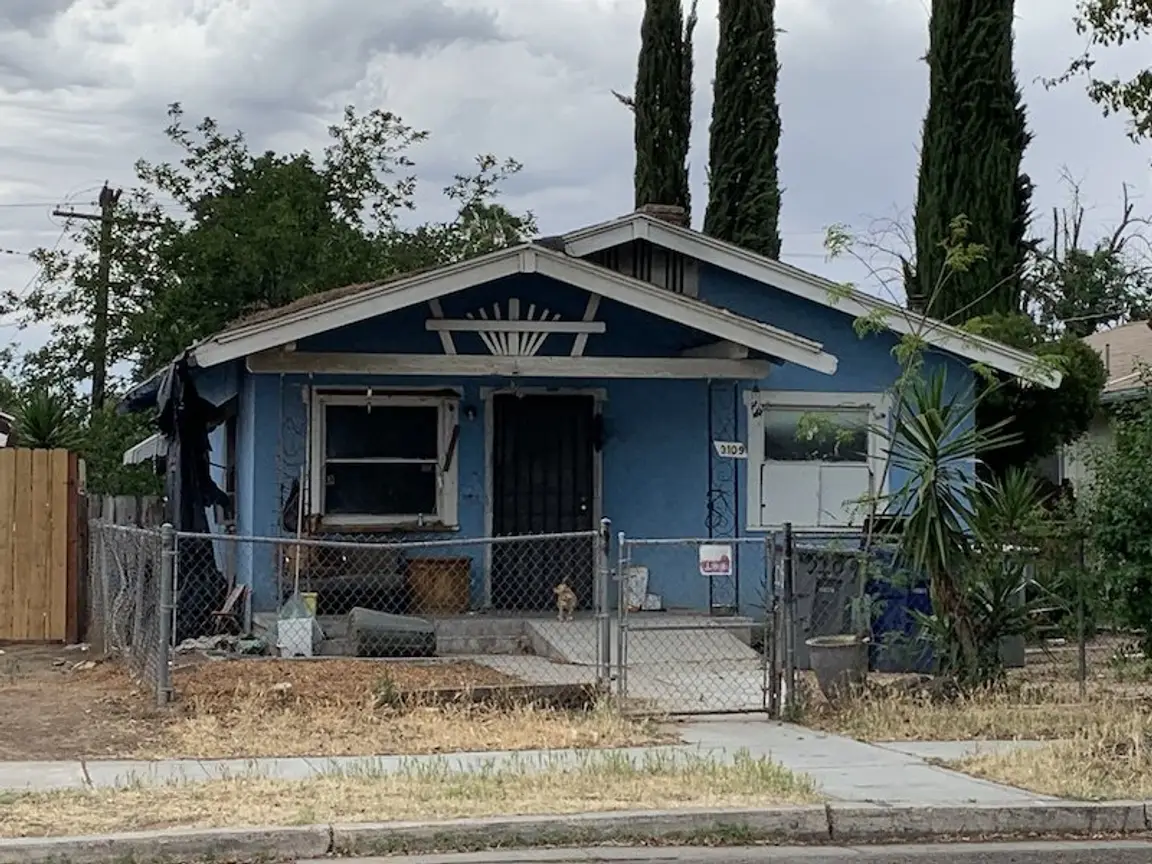
Yes — you can sell a house in Fresno, California with foundation movement, and you can sell it without repairing it first. What changes is not whether you can sell, but who is allowed to buy. Ordinary settling sells on the open market like any other house; active structural failure removes financed buyers from the pool, because a mortgage lender will not fund a home its appraiser flags as structurally unsound.
The reason that distinction is worth real money is arithmetic, and the arithmetic is not intuitive. Almost every seller assumes that fixing the foundation before listing pays for itself at the closing table. The best national data on that exact question says otherwise.
Does fixing the foundation before you sell get your money back?
Zonda publishes the annual Cost vs. Value Report, the long-running study built to answer one question: what does a remodeling project actually add to a home’s sale price? In Zonda’s 38th annual Cost vs. Value Report, published September 18, 2025, garage door replacement led the nation at 267.7% of cost recouped — a $4,672 job that added $12,507 at resale — and the report priced 28 remodeling projects across 119 U.S. markets without including structural foundation repair among them.
That omission is the point. Look at what does make the list, from the same annual report:
- Garage door replacement » 267.7% recouped
- Steel entry door replacement » 216.4%
- Manufactured stone veneer » 207.9%
- Minor kitchen remodel » 112.9% — the only interior project in the top five
- Vinyl siding replacement » 96.5% and a wood deck addition » 94.9% — both already under water
Eight of the top ten are exterior replacements: things a buyer sees from the street. Foundation work is the opposite of that. It is invisible, and it does not lift a sound house above market — it removes a discount from a damaged one. That is a real financial event, but it is a different one, and it is why “repair it first and you’ll get it back” is the wrong mental model to plan a sale around.
The cost is not one number either. This Old House’s 2026 foundation repair pricing guide, updated in March 2026, puts the national range at $2,224 to $8,134 with an average of $5,179 — but that average hides roughly a 40x spread by method: mud-jacking a sunken slab runs $550 to $1,300, piering or underpinning runs $1,000 to $3,000 per pier, and full foundation lifting and leveling runs $20,000 to $23,000. Those are three completely different transactions wearing the same two words.
Settling or structural failure — how do you tell which one your Fresno house has?
This is where the careful read and the alarmed read genuinely diverge, and it is worth naming why.
The data-backed view: most cracks are normal. Every house moves. Hairline vertical cracks narrower than an eighth of an inch are routinely sealed with epoxy. The signs that actually warrant a structural opinion are horizontal or stair-step cracks wider than a quarter inch, floors sloped enough to roll a marble, doors and windows that stick seasonally, and gaps opening where trim meets wall — and it is several of those together, worsening over time, that matter rather than any one of them alone.
The alarmed view usually arrives attached to a free inspection. That is not an accusation of dishonesty; it is a structural conflict. The party diagnosing the problem is frequently the party selling the pier, and the two views differ because they are answering different questions — an engineer asks whether the structure is still moving, a repair company asks what it could install. A structural engineer’s report runs $500 to $1,000 in the same 2026 cost data, and it is written by someone with no product to sell you. On a house where the difference between the two diagnoses is $550 or $23,000, that is the cheapest money you will spend.
There is also a Central Valley wrinkle that national advice misses entirely. The U.S. Geological Survey reports that by 1970, more than a foot of land subsidence had occurred across about 5,200 square miles — roughly half the San Joaquin Valley — with some areas dropping as much as 28 feet, and renewed aquifer compaction during the 2007–09 and 2012–2015 droughts. Regional subsidence lowers everything together and generally does not crack a house. Differential settlement, where one corner drops while the rest stays put, is what does. Confusing the two is how a Fresno homeowner talks themselves into a quote they may not need.
What does a failing foundation mean for a Fresno homeowner who needs to sell?
The specific disqualifier is underwriting: the buyer’s lender will not fund it. HUD’s Single Family Housing Policy Handbook 4000.1 requires that the property be structurally sound and that the foundation be adequate to withstand all normal loads and serviceable for the life of the loan, and it requires the appraiser to note deficiencies affecting structural integrity. When that happens, the appraisal comes back subject to repair and the loan cannot close until the work is finished. The buyer’s mortgage cannot pay for the repair, because the mortgage does not fund until the repair is done. So the money comes out of the seller’s pocket, up front, on a house they are trying to leave. This is general information, not legal advice — and California sellers still have to disclose known material defects, repaired or not.
Which is why the only honest comparison is net proceeds, not sale price. Here is a worked example — illustrative inputs, stated below, not our actual results — on a Fresno, California house worth $300,000 once repaired that needs $24,000 of lender-required foundation and related work:
- Retail path: $300,000 sale price − $15,000 agent commission at 5% − $24,000 in lender-required repairs − $9,750 in carrying cost ($1,950 a month in mortgage, taxes, insurance and utilities across five months) − a $500 engineer’s report = roughly $250,750, five months out, and only if nothing falls through.
- Cash path: $232,000 as-is, with nothing subtracted — no commission, no repairs, no carrying months.
In that example the listing nets about $18,750 more, and a seller who can write the $24,000 check and wait five months should list the house. We would tell you the same thing on the phone. The comparison only inverts when the seller cannot fund the repair up front — which is the common case, because the reason a house lands on this path is usually that the $24,000 is not sitting in an account. When it is not, the retail column does not exist at any price: the financed buyers are gone, and the buyers who remain are cash buyers making cash-buyer numbers. If you want to see how that number is built, we break it down in how cash offers are actually calculated in Fresno, or you can get a cash offer from Big Buys Houses and hold it next to a listing estimate before you commit to either.
Should you repair the foundation or sell the house as-is?
If you have settling, time, and the cash: pay for the structural engineer’s report first, do the targeted repair, then list. Minor-settlement work is cheap next to the discount an unrepaired disclosure creates, financed buyers stay in your pool, and the Zonda data argues for spending whatever budget is left on what shows — the door, the siding, the curb, not the crawl space. This is the higher-net path, and most Fresno and Clovis sellers belong on it.
If you have active structural failure, no repair budget, or a hard deadline: the retail path is not slower, it is closed. Selling as-is to a cash buyer trades gross price for certainty and takes the repair off your balance sheet entirely. Our guide to selling distressed real estate in the Central Valley covers what that process looks like.
Foundation problems and selling a house in Fresno: common questions
Will a bank finance a house with foundation problems?
Usually not, until the problem is fixed. Under HUD Handbook 4000.1 an FHA appraiser must flag conditions affecting structural integrity, and conventional lenders apply similar standards, so an appraisal that identifies active structural movement typically comes back subject to repair. The loan can close after the work is completed and signed off — not before.
Do I have to disclose foundation repairs when I sell a house in California?
Yes. California sellers complete a transfer disclosure statement and are expected to disclose known material defects, including foundation problems and foundation repairs that have already been made. Keeping the engineer’s report, the contractor’s scope and any transferable warranty helps far more than staying quiet does. This is general information, not legal advice.
How much does foundation repair cost in 2026?
This Old House’s 2026 pricing guide, updated March 2026, reports a national range of $2,224 to $8,134 with a $5,179 average, but the method drives everything: $550 to $1,300 for mud-jacking, $1,000 to $3,000 per pier for underpinning, and $20,000 to $23,000 for full foundation lifting and leveling.
Can I sell a Fresno house as-is with a cracked slab?
Yes. Selling as-is is legal in California as long as you disclose what you know. What as-is changes is the buyer pool — you are selling to cash buyers and investors rather than to financed owner-occupants, and the offer reflects the repair the buyer is taking on. Big Buys Houses buys houses in Fresno, California in that condition.
What would you do with a cracked slab?
If it were your house — would you spend $500 on an engineer and find out, repair it and list it, or take the certainty and sell it as-is? We would rather talk you into the higher-net option than into a sale. Tell us what your house is doing and we will tell you honestly which column it belongs in.
Step 1
TEXT, CALL OR SUBMIT
YOUR INFO

We review the details of your home and set an appointment to speak with you.
Step 2
WE GIVE YOU A
FAIR CASH OFFER

We get a cash offer to you in 24hrs. No Obligation. No Fees. No Commissions
Step 3
CHOOSE YOUR
CLOSING DATE

We can close on your schedule, fast or slow. Sell your house on your terms.