
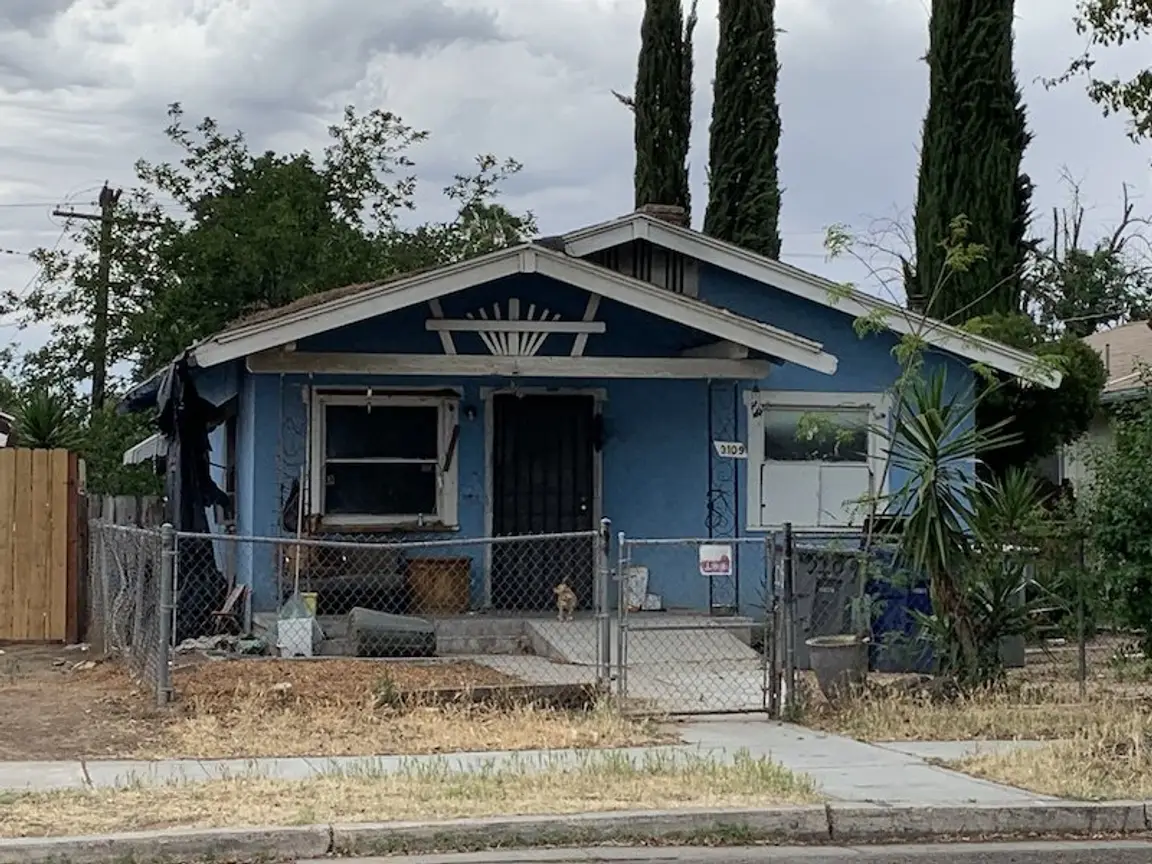
If you are relocating for work and need to sell a house in Fresno, California before your start date, you have two workable paths: list it with an agent and run the sale remotely from your new city, or sell it as-is to a cash buyer and pick your own closing date. The listing path almost always produces the bigger gross number. The cash path produces a certain date — and which one leaves more money in your pocket comes down to whether you can carry the Fresno house while you are already paying to live somewhere else.
There is also a dated event on the calendar this fall that lands squarely in the middle of most relocation timelines, and it has nothing to do with mortgage rates.
What is changing with California home insurance on October 15, 2026?
The California FAIR Plan — the state’s insurer of last resort — will raise rates on its dwelling line by an average of 29.1% effective October 15, 2026, for more than 675,000 California policyholders, and the Plan’s total exposure reached $768 billion as of June 2026. The FAIR Plan had asked the California Department of Insurance for 35.8%; regulators approved 29.1%, the largest increase in the Plan’s recent history, in an August 2026 decision.
The wider trend behind that number: a Stanford study released in June 2026 found California homeowners insurance premiums are up 84% since 2020, and FAIR Plan enrollment has grown from under 2% of California homes to about 5%. For a seller, insurance stopped being a line item the buyer handles quietly in the background and became one of the things that can move a closing date.
Does a Fresno fire hazard zone designation actually make a house harder to sell?
There are two versions of this story and they are not equally supported.
The data-backed version is narrow and real. CAL FIRE’s updated local-responsibility hazard maps — the first refresh in more than a decade — designated more than 800,000 acres in Fresno County as fire-prone, and newly flagged parts of north Fresno and the San Joaquin River bluffs that most owners there never thought of as fire country. California sellers must disclose that designation, and a 2023 Resources for the Future working paper found disclosure cut home values by an average of 4.3% in California fire zones. That is a measurable discount, not a catastrophe.
The alarmist version — that nobody can insure or sell a California house anymore — takes a concentrated problem and stretches it over the whole state. It falls apart on two facts in the same reporting: FAIR Plan new business is down about 25% year over year, and private carriers are writing in California markets again. Most of Fresno’s flat urban core is not in a mapped hazard zone at all. The two views differ because one is about specific ZIP codes and the other is about a headline.
What does a job relocation deadline actually cost a home seller in the Central Valley?
Here is the specific thing that breaks the retail path for a relocating seller: the retail timeline is longer than your timeline, and you do not control the parts that stretch it. Your buyer’s underwriting, the appraisal, and — in a mapped hazard zone — the insurance binder all sit outside your hands. A lender cannot fund without acceptable evidence of property insurance under Fannie Mae’s property insurance requirements, so a buyer waiting on a FAIR Plan quote plus a wrap policy can push your close date past your start date. Meanwhile the house goes empty, and most standard homeowners policies restrict or suspend coverage once a home has been vacant for a set period — commonly 30 to 60 days depending on the form. Check your own declarations page.
Compare net proceeds, not asking prices. Worked example only — these are illustrative inputs, not Big Buys Houses results: a $340,000 Fresno house, sold while the owner starts a job out of state.
- Retail path: $340,000 sale price, minus a 5% agent fee ($17,000), minus $8,000 in repairs the buyer’s lender requires, minus four months of carrying cost at $2,050/month ($8,200), minus a $5,000 closing credit to hold the deal together — roughly $301,800 net, on a date you find out about later.
- Cash path: a lower gross of about $278,000, as-is, no commission, no repairs, closing in weeks on a date you choose — roughly $278,000 net.
In that example the listing wins by about $23,800, and a seller who can carry the house from the new city should list it. That gap is worth roughly eleven months of carrying cost, so a normal one- or two-month delay does not erase it. The arithmetic only flips when you cannot carry two housing payments at all, when the house will sit vacant long enough to create a coverage problem, or when a fall-through resets the clock past the point you can fund. If that is your situation, you can get a cash offer and see the two numbers side by side before you decide. How the cash number is built is broken down in our guide to how cash offers are actually calculated in Fresno.
Should you list from your new city or sell before you go?
This is not a matter of opinion. It is two different situations with two different right answers.
- Start date 90+ days out, house in decent shape, and you can cover both housing payments: list it. Hire a local agent, pre-order the disclosures, get the hazard-zone designation and any insurance history into the file up front so your buyer’s carrier is not the last domino. You will very likely net more.
- Start date inside 60 days, or the house will sit empty, or you cannot fund two payments and lender-required repairs: price certainty is worth more than the spread. A cash sale on a date you choose removes the buyer’s loan, the appraisal, and the insurance binder from your critical path at once. That is the case Big Buys Houses is built for, in Fresno and in Clovis.
This is general information, not legal or insurance advice.
Common questions about selling a Fresno house when you are relocating for work
How fast can I sell my house in Fresno if I am moving for a job?
An as-is cash sale in Fresno, California generally closes in weeks rather than months, because there is no buyer loan, no appraisal contingency and no lender-required repair list. A financed retail sale runs longer and the date is set by the buyer’s lender, not by you.
Can I sell my Fresno house after I have already moved out of state?
Yes. Disclosures, the deed and closing documents can be signed remotely and notarized where you live, and escrow can wire proceeds to you. The practical risks of selling from a distance are the empty house and the coverage gap it can create, not the paperwork.
Do I have to tell buyers my house is in a fire hazard zone?
Yes. California requires sellers to disclose a property’s CAL FIRE hazard zone designation as part of the natural hazard disclosure. Withholding it is a far larger problem than disclosing it. Check your own address against the CAL FIRE hazard zone map before you list.
Will my employer’s relocation package cover a loss on the sale?
Some do and many do not. Ask your relocation coordinator specifically whether the benefit covers a loss on sale, months of carrying cost on an unsold home, or neither — that answer often decides which of the two paths above makes sense for you.
What would you do — list it from your new city, or sell before you go?
If you are moving for work out of Fresno or Clovis and staring at a start date, we would like to hear how you are thinking about it. Are you carrying it and listing, or clearing it before you go? Tell us your timeline and we will tell you honestly which path we think nets you more — including when that answer is “list it.”
Step 1
TEXT, CALL OR SUBMIT
YOUR INFO

We review the details of your home and set an appointment to speak with you.
Step 2
WE GIVE YOU A
FAIR CASH OFFER

We get a cash offer to you in 24hrs. No Obligation. No Fees. No Commissions
Step 3
CHOOSE YOUR
CLOSING DATE
We can close on your schedule, fast or slow. Sell your house on your terms.